

Last updated June 2026
Most HR teams managing employee experience are doing it across more than one system. That means more than one vendor, more than one data source, and more than one place for things to fall through the cracks.
An all-in-one employee experience platform is built to change that.
This matters because the gap between data and action is where most employee experience programs fail. Companies know employees are disengaged. They don't always know why. And when they do know, the tools to respond often live in a different system, owned by a different team, with a different vendor relationship.
What are the benefits of an all-in-one employee experience platform?
Running recognition and employee listening on a single platform means HR teams can connect what employees say to what leaders do about it, across data, manager behavior, and budget.
Here's where that shows up:
1. A single data layer connects recognition and listening
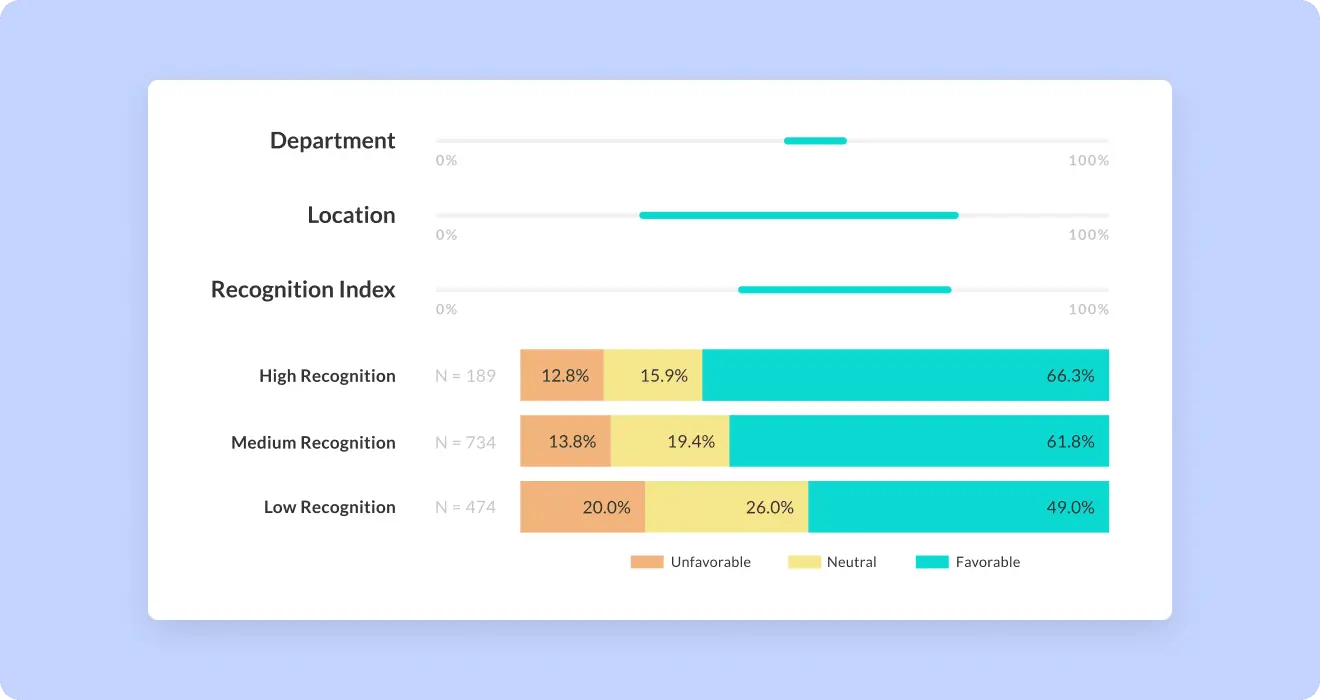
When your recognition platform and survey tool share data natively, you can see the correlation between recognition frequency and engagement scores. You can tell whether teams that recognize each other more often also score higher on your engagement surveys. You're collecting two kinds of signal and doing something with the relationship between them. That connection is what makes the data actionable.
WorkTango surfaces that correlation directly inside Surveys & Insights dashboards through the Recognition Index, so the connection between listening and action is visible without a manual export.
2. Managers work from one place
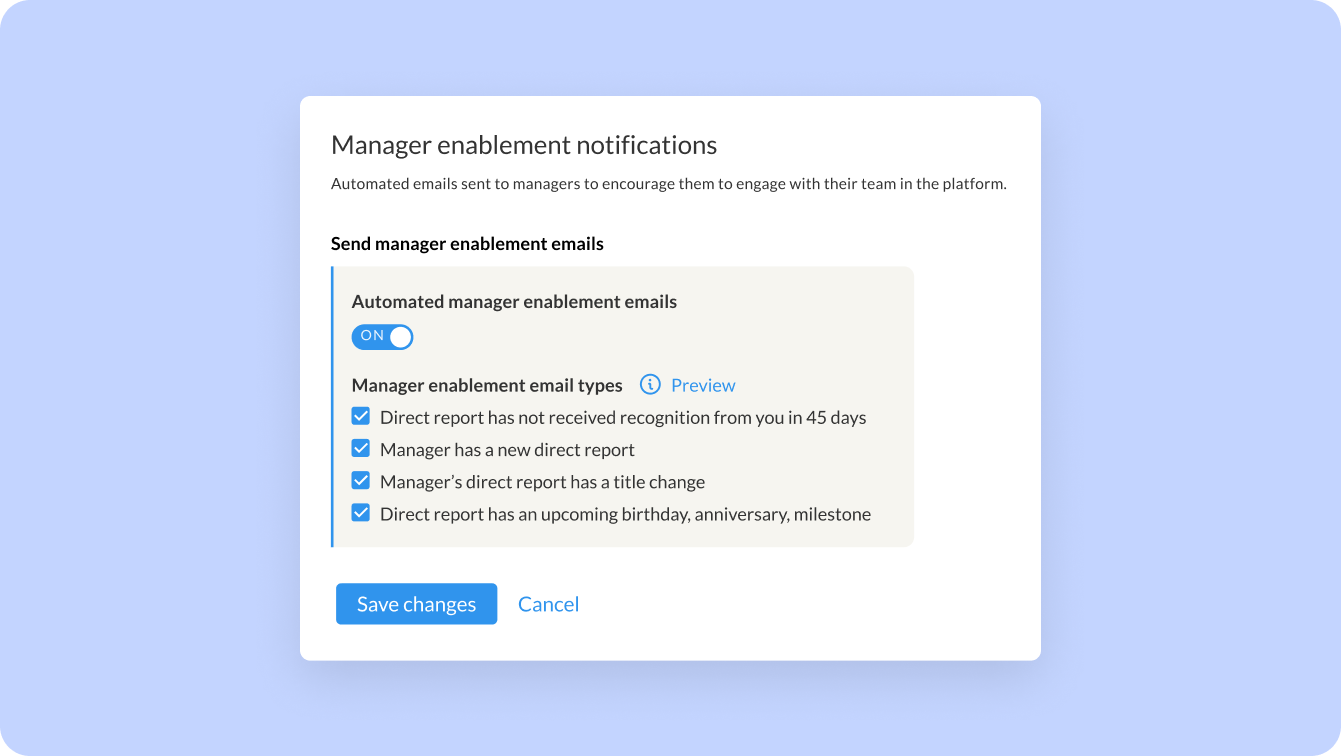
When recognition tools and survey dashboards are separate, managers have to log into two systems to understand their team. Most don't. Low manager adoption on either platform is often a consequence of that friction. An all-in-one platform removes the split and puts recognition gaps and survey trends in a single manager view.
WorkTango is built for manager enablement, with a single view that surfaces recognition gaps, survey trends, team analytics, and recommended next steps, and accountability on action follow-through in one place.
3. Administrative overhead drops significantly
Running two platforms means managing two contracts, two renewal cycles, two vendor relationships, and two HRIS integrations. For a lean HR team, that overhead adds up fast.
WorkTango runs recognition and surveys from a single HRIS integration, one support team, and one renewal cycle.
.png?width=500&height=434&name=worktango-hris-integrations%20(2).png)
4. Employee choice in Rewards
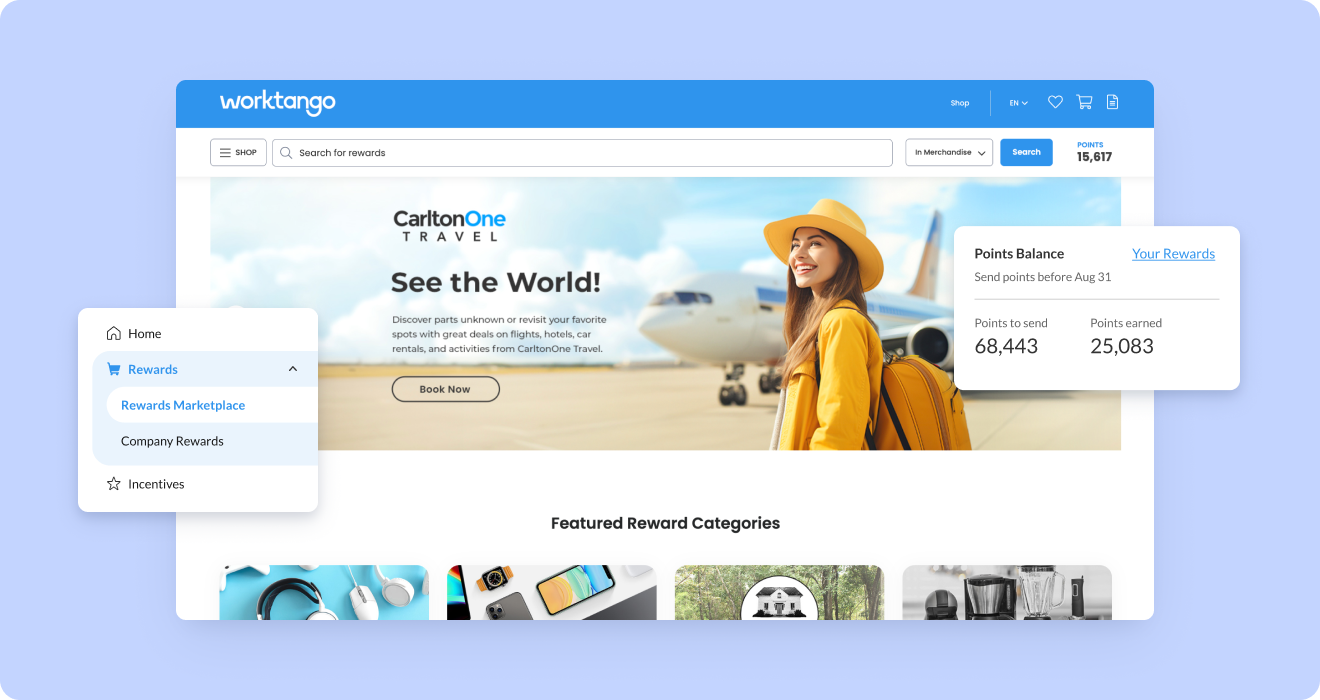
WorkTango offers a global marketplace with options meaningful to every employee, from merchandise to experiences to charitable donations.
5. Survey programs scale without per-survey costs
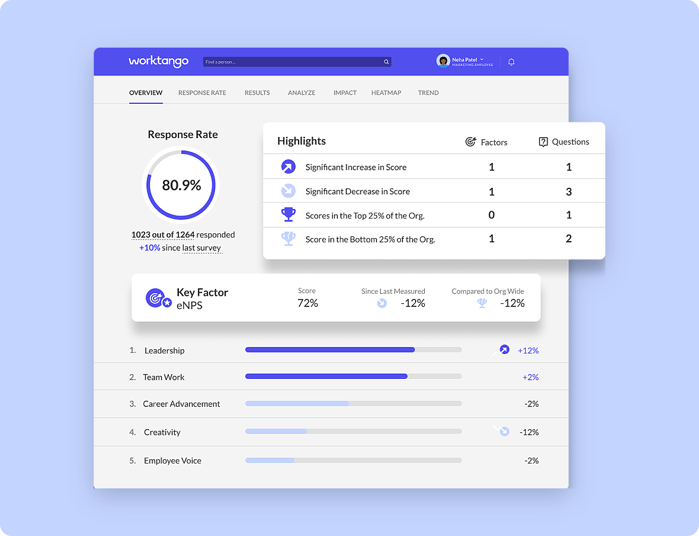
HR teams run more survey types than most vendors price for, including onboarding, exit, pulse, DEI, manager effectiveness, benefits feedback. A true all-in-one platform includes unlimited surveys and unlimited admins in the base price.
WorkTango includes unlimited surveys and unlimited admins in the base price, which is how Rexall scaled active listening across 470 pharmacy locations without adding to their survey budget.
6. Implementation and advisory included
A platform that arrives with no support puts configuration burden on your team. WorkTango includes implementation guidance and ongoing advisory in the license rather than as a separate service tier. The result is a 9/10 average Launch and Support CSAT and a 60 Admin NPS.
Taken together, those six advantages represent a meaningful difference in how HR teams operate day to day. The table below shows how that plays out when you put the top all-in-one EX platforms side by side with managing separate tools.
All-in-one employee experience platform vs. separate solutions
| All-in-one EX platform | Separate solutions | |
|---|---|---|
| Admin setup and management | Single vendor, single login, one HRIS sync | Two contracts, two integrations, two admin teams |
| Data visibility | Recognition and survey data in one platform | Data lives in separate systems; manual exports required |
| Manager experience | Holistic overview of their team in one platform | Two logins, two interfaces, inconsistent adoption |
| Renewal and vendor risk | One renewal cycle | Two negotiation timelines; budget exposed twice annually |
| Recognition to action loop | Survey results directly inform recognition strategy | No native connection between listening and response |
| Rewards options | Millions to choose from so employees have choice | Pre-selected options that don't feel meaningful to each individual |
| HR admin burden | Centralized reporting, one support contact | Split accountability across two vendor teams |
What to look for when evaluating employee experience platforms
Not every vendor that calls itself all-in-one delivers it. Here is what actually matters when you're comparing options.
- Native data sharing. Ask any vendor: can I see recognition activity and survey insights in the same system? Can I correlate recognition frequency with engagement scores by team? If the answer involves a manual export, the platform is not truly all-in-one.
- A manager experience that works across both products. If managers need two logins to see their team's recognition activity and survey results, adoption will suffer on both sides. Look for a view that covers both.
- Unlimited surveys in the base price. Many platforms charge per survey type or per admin seat. A true all-in-one platform includes unlimited surveys and unlimited admins without add-on fees.
- Implementation and advisory included in the license. A platform that hands off after go-live puts the configuration burden on your team. WorkTango includes ongoing advisory support at no additional cost.
WorkTango is an all-in-one employee experience platform
WorkTango combines Recognition & Rewards and Surveys & Insights in a single platform, with a shared data layer that connects what employees say to what leaders do about it. Both products were designed to work together.
That means a Recognition Index visible inside survey dashboards, a view that surfaces recognition gaps and survey trends in one place, and one HRIS integration that feeds both products from the same data source.
For HR teams building the internal business case for consolidation, the ROI of EX Software Research Report and three pillars of employee experience ROI are useful starting points.
See WorkTango in action...
Get a 30-minute walkthrough to see both products running together in a live environment.