

You've likely heard about the Employee Net Promoter Score (eNPS). But, how relevant is it to your organization, your people strategy, and your employee engagement efforts? There's even a chance you're utilizing it without realizing its full potential. Dive into our latest article to explore the significance of eNPS in enhancing employee engagement, with insights from an HR expert.
What is the Employee Net Promoter Score?
eNPS is a simple yet powerful tool for gauging employee sentiment. It measures based on a single question: "Would you recommend our organization to others?" Employees then respond using a Likert Scale. As an example, on a 10-point Likert Scale, a would 1 mean very unlikely to recommend, and 10 would mean highly likely.
The goal of eNPS is to gather honest feedback, analyze it statistically, and gain a clear understanding of overall employee satisfaction. This insight enables organizations to make informed decisions and take meaningful action to improve their workplace.
How to Interpret Employee Net Promoter Score (eNPS)
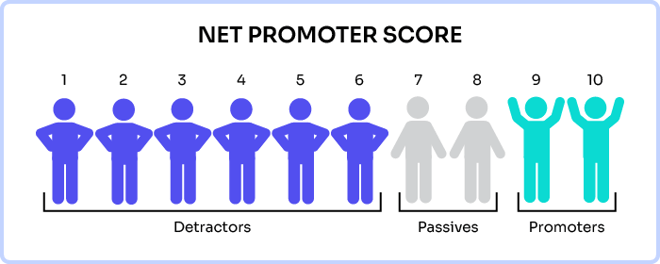
A research report by Maya Yaneva, published in the European Journal of Economics and Business Studies, dives deep into Employee Net Promoter Score and its implications for gauging employee sentiment. The eNPS categorizes employee feedback into three distinct groups:
- Promoters (Scores of 9-10) are enthusiastic and loyal. They often act as ambassadors for your organization. They are highly likely to recommend your company to others. They have strong job satisfaction, are very engaged, and are also more productive.
- Passives (Scores of 7-8) answer on the neutral side of the scale. They are generally satisfied with work, but are unenthusiastic about it. Passives pose a risk to the organization. Their engagement is not strong enough to keep their loyalty. So, other job offers might sway them. This score is a sign that the employee may have some - but not all - of their work-related needs met.
- Detractors (Scores of 0-6) represent dissatisfied employees. They’re unlikely to recommend your organization. They can negatively influence others, and are less engaged at work.
Monitoring the distribution of Promoters, Passives, and Detractors can provide valuable insights into employee engagement levels. It will also help you identify shifts so you can pinpoint and take action on areas needing attention. For optimal engagement strategies, many organizations use employee survey software with robust reporting capabilities. This ensures that action plans moving forward are data-driven and clear.
How to Calculate eNPS
Calculating your Employee Net Promoter Score (eNPS) can be done in just three simple steps:
- Conduct a survey: Distribute a survey that includes the critical eNPS question: "On a scale of 0-10, how likely are you to recommend our organization as a place to work?"
- Categorize the responses: Once the survey results are collected, classify the responses into three categories: Promoters (9-10), Passives (7-8), and Detractors (0-6).
- Calculate eNPS: Subtract the percentage of Detractors from the percentage of Promoters. The result is your eNPS.
By regularly tracking your eNPS over time, you can gauge whether your employee engagement is headed in the right direction.
Integrating eNPS Into Your Engagement Strategy
Employee Net Promoter Scores are vital. An eNPS score helps us understand employee satisfaction and organizational success. By incorporating the eNPS question into your regular employee engagement and pulse surveys, you gain timely insights into workforce sentiment. Tools like WorkTango's Surveys & Insights software can help you easily add Employee Net Promoter Score questions to your surveys.
- Regular engagement surveys: Introduce the eNPS question into your standard company-wide surveys to track changes in employee sentiment over time. This approach helps you track trends across your organization.
- Pulse surveys: Implement eNPS in more frequent pulse surveys to detect immediate shifts in employee sentiment. Real-time data like this allows for swift identification and resolution of issues as they arise.
- Deepen Insights: If you see scores stagnate or fall, combine eNPS results with other survey questions. This analysis can find hidden problems and chances to improve. It gives a clearer path to better employee engagement.
Why use eNPS?
An Employee Net Promoter Score is a great tool for measuring employee engagement. Measuring employee engagement is crucial for any organization's success. Highly engaged employees lead to higher company performance and ROI. In fact, in our research, we found that a staggering 93% of companies say employee engagement program investments provide a positive ROI. Typical examples of performance and ROI include better retention, lower absenteeism, and enhanced creativity, productivity, and financial performance.
5 Benefits of Using eNPS
- Simple and efficient: eNPS can be measured with just one question. This makes it simple, yet very useful.
- Effective for growth: eNPS helps you measure employee engagement accurately. Engaged employees are proven to be more likely to foster positive customer relationships, which will lead to increased lifetime customer value and revenue
- Enhances employee engagement: By addressing shifts in eNPS and taking actionable steps, organizations show they value and listen to their employees. This ultimately further boosts morale and engagement.
- Strengthens employee voice: Asking about employee satisfaction helps organizations better understand and meet their employees' needs. Being given a voice and seeing positive action result from sharing their experiences in turn enhances employee productivity and loyalty, and makes employees more likely to share their honest feedback and ideas with the company in the future.
- Reinforces employer brand: Engaged "Promoter" employees often refer new talent to their company, even post-departure. This natural advocacy enhances company recruiting efforts and strengthens your employer brand in today’s competitive job market.
The Evolution of eNPS
Originating from the Net Promoter Score (NPS) introduced by Frederick F. Reichheld in his Harvard Business Review article, "One Number You Need to Grow", eNPS adapts this metric for internal use. By treating employees as well as customers and employing successful consumer market tactics internally, organizations can achieve remarkable outcomes.
At WorkTango, we incorporate eNPS in our monthly pulse surveys to gain continuous insights into employee engagement. This approach resonates with our belief that while happy employees are good, loyal, deeply engaged employees are truly unstoppable. To learn more about employee surveys and eNPS, book a demo today.