Text of this page
Page 1
01 INTRODUCTION & QUICK START
Why we wrote this guide
How to navigate this guide
What is an RFP?
The RFP process at a glance
THE COMPLETE GUIDE TO Writing an RFP for Employee Recognition Software
02 PLAN YOUR EVALUATION
2.1 Building your business case for employee recognition
2.2 Assembling your evaluation team
03 WRITE YOUR RFP
3.1 What to include in your RFP
3.2 Best practices for writing RFPs
3.3 Ready-to-Use RFP Template
04 SEND & MANAGE YOUR RFP
4.1 You’ve put in the work. Time to hit “send”.
05 SCORE & CHOOSE
5.1 Review your proposals
5.2 Score your proposals
5.3 Run demos with your finalists
5.4 Make your final decision
06 LAUNCH & NEXT STEPS
6.1 Immediately after selection
6.2 During implementation (90 days to launch)
6.3 First 90 days after launch
6.4 12-month review (measure your ROI)
6.5 What happens next
6.6 Final thoughts
Page 2
Introduction & Quick Start
WHY WE WROTE THIS GUIDE
You’ve been asked to evaluate employee recognition software. Maybe you’ve never written an RFP before.
Maybe you have, but not for HR software. Either way, you’re probably wondering: where do I even start?
Here at WorkTango, we’ve won hundreds of RFPs over the years. From this, we’ve learned what really matters to HR leaders when choosing the right recognition vendor. And we’ve turned those insights into a step-by- step playbook you can use to run a smoother, faster, and more successful RFP.
This guide walks you through the entire RFP process, from planning to final selection. By following it, you’ll:
• Build a business case that justifies the investment to leadership
• Define exactly what you need (so vendors understand your problem)
• Compare vendor proposals fairly and consistently
• Make a confident, data-driven decision
• Launch your new recognition program on schedule
The best part? You don’t need to reinvent the wheel. We’ve included templates, examples, and checklists you can customize for your company.
HOW TO NAVIGATE THIS GUIDE
Starting from scratch?
Read Sections 1 through 3 first to get the full picture and understand the process.
Ready to write your RFP today?
Jump to Section 3 and use the templates at the end of the guide. But first, skim Section 2 to make sure you’ve done the planning work—it’s worth it.
Already have proposals from vendors?
Skip to Section 5 to learn how to score and evaluate them fairly.
Just implementing? Section 4 covers everything from sending the RFP through managing the evaluation process.
Page 3
WHAT IS AN RFP?
An RFP (Request for Proposal) is a document that outlines what you need and asks vendors to explain in writing how they’d solve your problem and what it would cost.
Think of it like planning a wedding and choosing a caterer. You could call five different caterers, get verbal quotes over the phone, and try to remember which one said what. Or you could write down your guest count, budget, and event date once, then send it to all five caterers asking for written proposals. This way, you save time and get responses you can actually compare side by side.
The main benefit? You get everything in writing instead of trying to piece together details from multiple sales calls. Vendors answer the same questions in the same format, which makes comparison actually possible.
THE RFP PROCESS AT A GLANCE
Here’s the roadmap. These five steps take you from “I need to write an RFP” to “We’ve chosen our vendor and we’re ready to implement.”
Step 1: Plan Your Evaluation (Section 2)
Build your business case, assemble your evaluation team, and document what you’re trying to solve.
Step 2: Write Your RFP (Section 3)
Create your RFP document with your requirements, vendor questions, and evaluation criteria.
Step 3: Send & Manage Your RFP (Section 4)
Distribute your RFP to vendors, handle their questions, and stay organized during the process.
Step 4: Score & Evaluate (Section 5)
Review proposals, score vendors against your criteria, run demos, and narrow down your finalists.
Step 5: Decide & Implement (Section 6)
Check references, negotiate terms, and prepare for launch.
Next: Ready to start? Section 2 starts with the most important step: making sure you have executive buy-in and a solid business case.
Page 4
Plan Your Evaluation
Many people may skip this section. They jump straight to writing the RFP without doing the groundwork.
Then they wonder why vendors are confused, stakeholders push back, or the final decision gets delayed.
Don’t skip this step. The time you invest in planning makes everything else faster and easier. Set your foundation up so your RFP is backed by data and tailored to your exact goals.
2.1 BUILDING YOUR BUSINESS CASE FOR EMPLOYEE RECOGNITION
Before you can evaluate recognition software, you need to explain why you need it in the first place.
This is especially important if you’re asking for budget, need leadership buy-in, or are replacing an existing solution.
Step 1: Calculate your current state
Even if you don’t have formal recognition software today, you’re spending money on recognition.
You just might not realize how much. Disjointed recognition program costs often include:
• Ad hoc rewards: HR or managers buying Amazon cards, Starbucks cards, random awards, etc.
• Service awards: Years-of-service gifts, retirement gifts, milestone celebrations
• Spot bonuses: Cash awards for performance or projects
• Admin time: HR time spent processing requests, ordering gifts, tracking budgets
• Events and celebrations: Team lunches, happy hours, offsites for recognition
• Legacy systems: If you have an old platform, what are you paying annually?
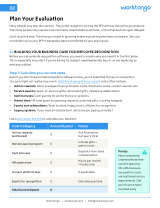
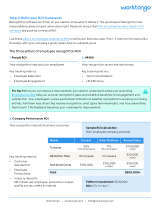
Use a worksheet like this to calculate your baseline:
Cost Category Annual Spend Notes
Ad hoc rewards (estimated) $ Ask Finance for last year's total
Service award program $ Include gifts + admin costs
Spot bonuses $ Separate from base compensation
Pro tip:
Most companies underestimate their
HR admin time $ Hours per month × hourly rate current spend by
30-40% because
Current platform fees $ If applicable recognition costs are scattered across departments. Get Events for recognition $ Estimate quarterly your finance team involved early.
Total Current Spend $
Page 5
Step 2: Build your ROI framework
Recognition software isn’t free, so you need to show what it delivers. The good news? Recognition has measurable business impact when done right. Research shows that 93% of companies who invest in EX software see positive or neutral ROI.
Use these pillars of employee experience ROI to build your business case. Pick 1-2 metrics from each pillar that align with your company’s goals. Here’s how to calculate yours.
The three pillars of employee recognition ROI
1. People ROI
2. HR ROI
How recognition impacts your employees.
How recognition saves time and money.
Key tracking metrics:
Key tracking metrics:
• Employee Retention
• Cost Consolidation
• Employee Engagement
• HR Efficiency
Pro tip: Before you can measure improvement, you need to understand where you’re starting.
Employee surveys help you uncover recognition gaps and establish baselines for engagement and satisfaction. Your employees’ voices are the best indicator of whether recognition is working or missing entirely. Ask them how often they receive recognition, what types feel meaningful, and how valued they feel at work. This feedback becomes your roadmap for improvement.
3. Company Performance ROI
How recognition impacts business outcomes.
Sample ROI calculation
500-employee company example
Metric Current After Platform Annual Value
Turnover 20% (100 employees) 17% (85 employees) $750,000 saved
HR Admin Time 10 hrs/week 2 hrs/week $20,000 saved
Key tracking metrics:
• Customer Satisfaction
Scattered Costs $150,000 $120,000 unified $30,000 saved
• Employee Productivity
Total $800,000+
• Industry-Specific KPIs (Sales per employee, production output, quality scores, safety incidents) Platform Investment: $120,000 ROI: 6.7x in Year 1 WorkTango • worktango.com • info@worktango.com
Page 6
Step 3: Survey employees and document your pain points
Before you write your RFP, you need to clearly articulate the specific problems recognition software needs to solve for your company. These pain points become the “why” in your RFP. Vendors need to understand them to propose the right solution.
The best pain points come directly from your employees. Before you do anything else, send a brief pulse survey asking:
• How often do you receive recognition at work? (daily, weekly, monthly, rarely, never)
• When you do receive recognition, what form does it take? (verbal, written, gift, public, private)
• Do you feel valued for your contributions?
• What would make recognition feel more meaningful?
• What frustrates you about how recognition works here?
Employee input transforms your pain points from assumptions into data-backed evidence. This feedback becomes powerful ammunition when you present your business case to leadership (Section 2.1). Employees are telling you exactly what’s broken. That’s why it’s so important to listen to them.
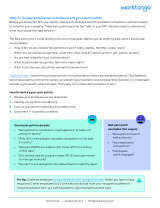
How to identify your pain points:
1. Review your employee survey responses
2. Identify recognition frustrations
3. Look at your current spending and admin time
4. Document 3-5 specific problems
Good pain point examples:
Bad pain point
• “Recognition is invisible. It only happens in private, not visible to teams”
examples (too vague):
• “Recognition doesn’t feel authentic”
• “Only 30% of employees received recognition in the past 3 months”
• “We need better recognition”
• “We spend $80K annually on gift cards with no tracking or ROI data”
• “Employees aren’t engaged”
• “Our service awards program takes HR 15 hours per month to manage manually”
• “We can’t track recognition by department to identify gaps”
Pro tip: Combine employee survey feedback with recognition data. When you layer survey responses (“what employees say”) with behavioral data from your recognition platform (“what employees do”), you build a powerful, data-backed business case.
Page 7
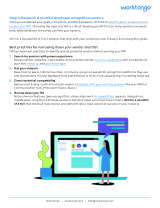
Step 4: Research & shortlist employee recognition vendors
Once you’ve defined your goals, pain points, and ROI framework, it’s time to identify which vendors should receive your RFP. Choosing the right shortlist is critical. Sending your RFP to too many vendors can waste time, while sending it to too few can limit your options.
Aim for a focused list of 3 to 5 vendors that align with your company’s size, industry, and recognition goals.
Best practices for narrowing down your vendor shortlist
Follow these best practices to identify and vet potential vendors before sending your RFP:
1. Search for vendors with proven experience Review vendor websites, case studies, and customer stories. Look for experience with companies of your size, industry, and workforce type.
2. Ask your network Reach out to peers, HR communities, or industry groups to see which recognition platforms they use and recommend. Honest feedback from practitioners is often more valuable than marketing materials.
3. Check technical compatibility Before shortlisting, confirm that each vendor integrates with your existing systems like your HRIS or communication tools (Microsoft Teams, Slack.) 4. Narrow down your list Note common features (peer recognition, values alignment, AI capabilities, rewards, integrations, mobile apps, analytics). Eliminate vendors that don’t meet your must-have criteria. Aim for a shortlist of 3 to 5 that check all major boxes and demonstrate a track record of success in your industry.
Page 8
Step 5: Gather data and present to leadership
Once you have your numbers, present your business case to get budget approval and stakeholder buy-in.
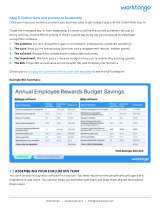
To get the strongest buy-in from leadership, it’s best to outline the current problem, the cost of doing nothing, and the ROI of solving it. Here’s a good way to lay out your proposal for employee recognition software:
1. The problem. Current recognition gaps (inconsistent, unmeasured, scattered spending) 2. The cost. What you’re losing today (turnover costs, engagement impact, hidden spend) 3. The solution. Recognition software with measurable outcomes 4. The investment. Platform costs + rewards budget (show you’re redirecting existing spend) 5. The ROI. Projected annual value across People, HR, and Company Performance Check out our Employee Experience Metrics editable template to see the full framework.
Example ROI Summary:
2.2 ASSEMBLING YOUR EVALUATION TEAM
You can’t choose recognition software in a vacuum. You need input from the people who will approve it, implement it, and use it. This section helps you build the right team and keep them aligned throughout the process.
Page 9
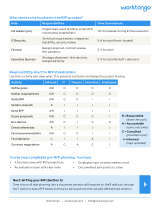
Who needs to be involved in the RFP process?
Role Responsibilities Time Commitment
HR Leader (you) Project lead, owns timeline, writes RFP, coordinates stakeholders 10-15 hrs/week during active evaluation IT/Security Technical requirements, integration feasibility, security review 5-8 hrs total (front-loaded) Finance Budget approval, contract review, ROI validation 3-5 hrs total Executive Sponsor Strategic alignment, final decision, budget authority 2-3 hrs total (kickoff + decision) Responsibility chart for RFP stakeholders Use this to clarify who does what. This prevents confusion and keeps the project moving.
Activity HR Lead IT Finance Executive Employees
Define goals A/R C C C C
Gather requirements A/R C C C C
Write RFP A/R C C I I
Vendor research R I I I I
Send RFP A/R I I I I
R = Responsible (does the work)
Score proposals A/R C C C I
Run demos A/R C I C C
A = Accountable (owns outcome)
Check references R I I I I
C = Consulted (provides input)
Final recommendation A/R C C I I
Final decision C I I A I
I = Informed (kept updated)
Contract negotiation R C A C I
You’ve now completed pre-RFP planning. You have:
• A business case with ROI projections
• Employee input on what matters most
• An evaluation team with clear roles
• Documented pain points to solve
Next: Writing your RFP (Section 3)
Time to turn all that planning into a document vendors will respond to. We’ll walk you through the 7 sections every RFP needs and how to ask questions that actually differentiate vendors.
Page 10
Write Your RFP
You’ve built your business case, assembled your team, and assessed your current state. Now it’s time to create the document vendors will actually respond to.
A good RFP does three things: it clearly defines what you need, it asks the right questions to compare vendors fairly, and it sets expectations for how you’ll make your decision. This section walks you through each component.
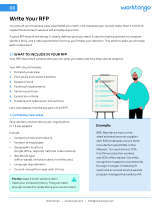
3.1 WHAT TO INCLUDE IN YOUR RFP
Your RFP should tell vendors who you are, what you need, and how they should respond.
Your RFP should include:
1. Company overview
2. Your goals and success metrics
3. Scope of work
4. Technical requirements
5. Vendor questions
6. Evaluation criteria
7. Timeline and submission instructions
Let’s dive deeper into the key parts of an RFP:
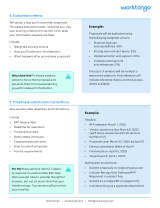
1. Company overview
Give vendors context about your organization in 1-2 paragraphs.
Example:
ABC Manufacturing is a mid-
Include:
sized automotive parts supplier
• Company name and industry with 850 employees across three
• Number of employees manufacturing facilities in the
• Geographic locations (single office, regional, national, international)
Midwest. Our workforce is 70% frontline production workers
• Workforce type (office-based, remote, hybrid, frontline, etc.) and 30% office-based. Currently, recognition happens inconsistently
• Language requirements through manager-initiated gift
• Current recognition approach (if any) cards and an annual service awards program managed manually by HR.
Pro tip: Keep it brief. Vendors don’t need your company history. They just need enough context to understand your environment.
Page 11
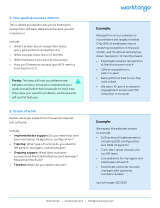
2. Your goals & success metrics
This is where you explain why you’re looking for
Example:
recognition software. Reference the work you did in Section 2.
Recognition at our company is inconsistent and largely invisible.
Include:
Only 30% of employees report
• What’s broken about recognition today (your pain points from Section 2.1) receiving recognition in the past month, and it’s almost entirely top-
• What success looks like in 12 months down. Success in 12 months means:
• Which behaviors you want to encourage
• Employees receive recognition at least twice per month
• How you’ll measure success (your ROI metrics from Section 2.1)
• 50% of recognition is peer-to-peer
• Recognition is tied to our five core values
Pro tip: This step will help you differentiate between vendors: those who understand your
• We see a 10-point increase in engagement scores and 15% reduction in turnover goals and will tailor their proposals to show how they solve your specific problems, and those who will just list features.
3. Scope of work
Explain what you expect from the vendor beyond just software.
Example:
We expect the selected vendor
Include:
to provide:
• Implementation support: Do you need help with technical setup, integrations, configuration?
• Full technical implementation including SSO configuration and HRIS integration
• Training: What type of training do you need for HR admins, managers, and employees?
• Train-the-trainer sessions for our HR team
• Ongoing support: What does customer success look like? Dedicated account manager? Response time SLAs?
• Live webinars for managers and employees at launch
• Timeline: When do you need to launch?
• Dedicated customer success manager with quarterly business reviews
Launch target: Q2 2025
Page 12
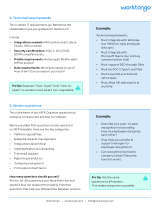
4. Technical requirements
This is where IT requirements go. Reference the
Example:
stakeholder input you gathered in Section 2.2.
Technical requirements:
Include:
• Must integrate with Workday (our HRIS) for daily employee data sync
• Integrations needed: HRIS (which one?), Slack, Teams, SSO provider
• Security certifications: SOC 2, ISO 27001, GDPR compliance, etc.
• Must integrate with Microsoft Teams (our primary communication tool)
• Mobile requirements: Native app? Mobile web? Offline access?
• Must support SSO through Okta
• Data requirements: What data needs to sync? How often? Can you export your data?
• Must be SOC 2 Type II certified
• Must have iOS and Android native apps
• Must allow full data export at any time
Pro tip: Separate “must-haves” from “nice-to- haves” so vendors know what’s non-negotiable.
5. Vendor questions
This is the heart of your RFP. Organize questions by
Example:
category so responses are easy to compare.
• Describe your peer-to-peer recognition functionality. How do employees recognize each other?
We’ve provided 100+ questions to ask vendors in our RFP template. Here are the key categories:
• Platform capabilities
• Budget & rewards management
• How does your platform support manager-to- employee recognition?
• Integrations & technical
• Implementation & onboarding
• Training & support
• Can recognition be tied to company values? Describe how this works.
• Reporting & analytics
• Company background
• Pricing & contract terms
How many questions should you ask?
Pro tip: Ask the same
Aim for 30-50 questions total. More than that and questions to all vendors.
vendors may not respond thoroughly. Prioritize
This makes comparison possible.
questions that help you differentiate between vendors.
Page 13
6. Evaluation criteria
Tell vendors how you’ll score their proposals.
This keeps everyone honest, including you. Use
Example:
your scoring criteria from section 5.2 to keep
Proposals will be evaluated using your information aligned and clear.
the following weighted criteria:
Include:
• Platform features and capabilities: 40%
• Weighted scoring criteria
• Pricing and contract terms: 25%
• How you’ll make your final decision
• What happens after you receive proposals
• Implementation and support: 20%
• Company background and references: 15%
The top 2-3 vendors will be invited to
Why share this? It shows vendors demo their platform. Final selection will where to focus their proposal and include reference checks and trial access prevents them from overwhelming where available.
you with irrelevant information.
7. Timeline & submission instructions
Give vendors clear deadlines and instructions.
Example:
Include:
Timeline:
• RFP release date
• RFP released: March 1, 2025
• Deadline for questions
• Vendor questions due: March 8, 2025 (we’ll share responses with all vendors by March 12)
• Proposal due date
• Demo dates (if known)
• Expected decision date
• Proposals due: March 22, 2025 by 5pm ET
• How to submit proposals
• Demos scheduled: Week of April 1
• Format requirements
• Final decision: April 15, 2025
• Target launch: June 1, 2025
Submission instructions:
• Submit proposals to rfp@company.com
Pro tip: Many vendors need 2-3 weeks
• Include ‘Recognition Software RFP Response’ in subject line to respond to a well-written RFP. Give them enough time to provide thoughtful answers, but not so much time that your
• Submit as a single PDF (no page limit) timeline drags. Top vendors will prioritize
• Include pricing as a separate attachment your timeline.
Page 14
Have a strict timeline?
Send your RFP to WorkTango - info(at)worktango.com - and you’ll receive a response within 48 hours.
Or, if you’d like to see how WorkTango would answer these questions before you start, request a demo and we’ll walk you through our expert-led and proven approach to employee recognition.
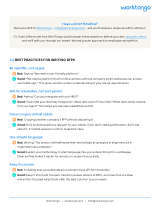
3.2 BEST PRACTICES FOR WRITING RFPS
Be specific, not vague
Bad: Saying “We need a user-friendly platform.”
Good: “We need a platform that frontline workers without company email addresses can access via mobile app.” This gives vendors a clear understanding of your actual requirements.
Ask for examples, not just yes/no
Bad: Asking “Can you integrate with our HRIS?”
Good: “Describe your Workday integration. What data syncs? How often? What does setup require from our team?” This helps you see real capabilities and fit.
Focus on your actual needs
Bad: Copying another company’s RFP without adjusting it.
Good: Only include questions relevant to your needs. If you don’t need gamification, don’t ask about it. If mobile access is critical, make that clear.
Use simple language
Bad: Writing “The vendor shall delineate their technological synergies in alignment with organizational paradigms.”
Good: Explain your technology in plain language, like you’re describing it to a colleague.
Clear writing makes it easier for vendors to respond accurately.
Keep it concise
Bad: Including every possible detail so vendors have all the information.
Good: Keep it short and focused. Vendors receive dozens of RFPs, and ones that are clear and action-focused helps them offer the best solution to your needs.
Page 15
3.3 READY-TO-USE RFP TEMPLATE
We’ve created a complete RFP template you can customize for your company.
It includes:
• All sections outlined above
• 100+ vendor questions organized by category
Download the RFP Template
You’ve completed writing your RFP. You have:
• A clear structure for your RFP document
• Vendor questions organized by category
• A template ready to customize
Next: Sending and managing your RFP (Section 4)
You’ve written it. Now let’s make sure it gets in front of the right vendors, you handle their questions professionally, and you stay organized the whole way through.
Page 16
Send & Manage Your RFP
You’ve written a clear, structured RFP. Now it’s time to share it with vendors and manage the process from distribution to proposal review. This section walks you through how to send your RFP, handle vendor questions, stay organized, and set yourself up for smooth evaluation later.
4.1 YOU’VE PUT IN THE WORK. TIME TO HIT “SEND”.
Before you hit send, make sure your RFP is complete, polished, and ready for vendor eyes.
How to send your RFP
You’ve done the heavy lifting. Now it’s time to send your RFP into the world. Before hitting send, take a few minutes to double-check your shortlist, finalize your document, and set vendors up for success with a clear, professional message.
1. Confirm your vendor list. Review your shortlist from Step 4 of Section 2 and confirm contact information for each vendor.
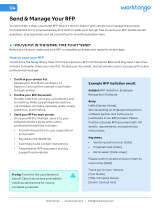
Example RFP invitation email:
Subject: RFP Invitation: Employee
2. Finalize your RFP document. Double-check for accuracy, consistency, and formatting. Make sure all required sections are included: company overview, goals, scope, questions, and timeline.
Recognition Software
Body:
Hello [Vendor Name],
We are seeking an employee recognition software partner and invite you to
3. Send your RFP to each vendor. Once your RFP is finalized, send it to your selected vendors along with a short, professional email that includes:
participate in our RFP process. Please find the attached RFP document with full details, requirements, and submission
• A brief introduction to your organization and project instructions.
• Key dates and deadlines
Key dates:
• Vendor questions due: [Date]
• Submission and contact instructions
• Proposals due: [Date]
• Attachments: RFP document and any supporting templates
• Demo week: [Date range]
Please confirm receipt and your intent to respond by [Date].
Thank you for your interest,
Pro tip: Treat this like a professional
[Your Name] kickoff. Clear instructions and realistic
[Title, Company Name] timelines set the tone for strong,
[Email / Contact Info] complete proposals.
Page 17
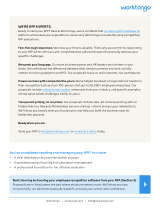
WE’RE RFP EXPERTS.
Ready to send your RFP? Here at WorkTango, we’re confident that our Recognition & Rewards platform will exceed your expectations. Here’s why WorkTango consistently wins competitive RFP evaluations:
Fast, thorough responses. We know your time is valuable. That’s why we commit to responding to your RFP within 48 hours with comprehensive, tailored answers that actually address your specific challenges.
We speak your language. Our team includes experts and HR leaders who’ve been in your shoes. We understand the difference between what vendors promise and what actually matters for driving adoption and ROI. Our proposals focus on real outcomes, not just features.
Proven success with companies like yours. We’ve helped hundreds of organizations transform their recognition culture, from 100-person startups to 50,000+ employee enterprises. Our proposals include relevant case studies, references from your industry, and specific examples of how we’ve solved challenges similar to yours.
Transparent pricing, no surprises. Our proposals include clear, all-inclusive pricing with no hidden fees (our Rewards Marketplace has zero markup - others charge upon redemption).
We’ll show you exactly what you’re paying for and help you build the business case for leadership approval.
Ready when you are.
Send your RFP to info@worktango.com or schedule a demo today.
You’ve completed sending and managing your RFP. You have:
• A clear distribution and communication process
• Organized proposal tracking and submission management
• A professional foundation for fair, efficient evaluation
Next: Scoring & choosing your employee recognition software from your RFP (Section 5) Proposals are in. Now comes the part where structure matters most. We’ll show you how to score fairly, run demos that actually reveal fit, and pick your winner with confidence.
Page 18
Score & Choose
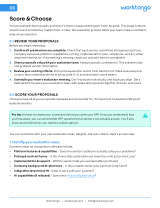
You’ve received the proposals, and now it’s time to separate the good from the great. This stage is where structure and consistency matter most. A clear, fair evaluation process helps your team make a confident, data-driven decision.
5.1 REVIEW YOUR PROPOSALS
Before you begin reviewing:
1. Confirm all submissions are complete. Check that each vendor submitted all required sections: company overview, platform capabilities, pricing, implementation plan, references, and any other required information. If something’s missing, reach out and ask them to complete it.
2. Share proposals only with your evaluation team. Keep proposals confidential. This prevents bias and protects vendor information.
3. Review your scoring criteria. Pull up the evaluation matrix from Section 2.2. Make sure everyone on your team understands the scoring scale (1-5) and what each score means.
4. Schedule your team’s evaluation meeting. Don’t evaluate individually and hope you align. Set a dedicated time when your evaluation team will review all proposals together, discuss, and score.
5.2 SCORE YOUR PROPOSALS
Once you have all of your proposals reviewed and accounted for, it’s important to decide HOW you’ll evaluate vendors.
Pro tip: It’s best to create your scorecard before you write your RFP. Once you understand how you’ll evaluate, you can write better RFP questions that vendors can actually answer. You’ll also know what information you need to collect upfront.
You can customize with your own evaluation areas, weights, and sub-criteria. Here’s an overview:
1. Identify your evaluation areas
Common areas for recognition software include:
• Platform features & capabilities - Does the vendor’s platform actually solve your problems?
• Pricing & contract terms - Is this financially sustainable and does the contract protect you?
• Implementation & support - Will the vendor help you succeed after purchase?
• Company background & references - Is this a stable vendor you can trust long-term?
• Integration & technical fit - Does it work with your systems?
• AI capabilities (if relevant) - Does their AI actually add value?
Page 19
2. Weight each area
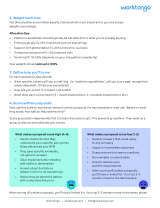
Not all evaluation areas matter equally. Decide what’s most important to you and assign weights accordingly.
Allocation tips:
• Platform capabilities should typically be 30–40% (this is what you’re actually buying)
• Pricing typically 15–25% (important but not everything)
• Support & implementation 15–25% (critical for success)
• Company background 10–15% (reduces risk)
• Technical fit 10–20% (depends on your integration complexity)
Your weights should add up to 100%.
3. Define how you’ll score
For each evaluation area, decide:
• What specific criteria will you score? (e.g., for “platform capabilities,” will you score peer recognition, values alignment, AI features separately?)
• How will you score? (1–5 scale? 1–10 scale?)
• What does each score mean? (3 = meets expectations, 4 = exceeds expectations, etc.) 4. Score written proposals Now use this scale to score each vendor’s written proposal. For each evaluation area, ask: “Based on what they wrote, how well do they address this?”
Score proposals independently first (no team discussions yet). This prevents groupthink. Then meet as a group to discuss and calibrate your scores.
What makes a proposal score high (4-5):
What makes a proposal score low (1-2):
• Vendor demonstrates they understand your specific pain points (they referenced your RFP)
• Generic answers that could apply to any company
• Vague or incomplete responses
• They gave specific examples, not generic answers
• Overpromises that seem unrealistic
• No examples or case studies
• Clear implementation timeline with realistic deliverables
• Doesn’t address your specific requirements
• Honest about limitations (doesn’t claim to do everything)
• After scoring all written proposals, you’ll have a ranked list. Your top 2-3 vendors move to the demo phase.
• Shows they’ve done this before with companies like yours
After scoring all written proposals, you’ll have a ranked list. Your top 2-3 vendors move to the demo phase.
Page 20
5.3 RUN DEMOS WITH YOUR FINALISTS
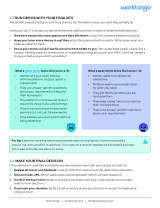
The written proposal told you what they claim to do. The demo shows you what they actually do.
Invite your top 2–3 vendors to demonstrate their platforms live. In order to make the best decision:
• Give each vendor the same agenda and time allotment so you can compare experiences fairly.
• Have your team score demos in real time using the same evaluation matrix. Write down what you observe while it’s fresh.
• Focus your demos on real-world scenarios that matter to you, like recognizing a peer, approving a reward, viewing analytics dashboards, AI capabilities, integrating with your HRIS. Don’t let vendors show you features you don’t care about.
What a good demo looks like (score 4-5):
What a weak demo looks like (score 1-2):
• Vendor lets your team interact with the platform, not just watch a presentation
• Vendor reads from slides the whole time
• Platform seems overcomplicated for what you need
• They can answer specific questions about your requirements (they did their homework)
• They get defensive when you ask hard questions
• The platform is intuitive and doesn’t require 10 steps to do simple things
• They keep saying “we can customize that” for everything
• They show real customer data (with permission), not just fake examples
• They can’t answer specific questions about your requirements
• They address your pain points without being defensive
Pro tip: Keep the same evaluation spreadsheet open during demos. Score functionality, ease of use, and overall fit in real time. This captures authentic feedback while details are fresh.
Don’t wait until after the demo to score.
5.4 MAKE YOUR FINAL DECISION
Once demos are complete and references are checked, meet with your evaluation team to:
1. Review all scores and feedback. Look at both the numbers and the qualitative comments.
2. Discuss trade-offs. Which weaknesses are acceptable? Which are deal-breakers?
3. Confirm the top choice. Make sure the winner aligns with your original goals and success metrics from Section 2.
4. Document your decision. Write a brief summary of why you chose this vendor for leadership and your team.
Page 21
You’ve completed scoring and evaluating. You have:
• Evaluation criteria determined
• Reviewed all proposals against your criteria
• Run demos with your top finalists
• Checked references with real customers
• Made a data-driven decision backed by scores and insights
• A clear winner ready to move forward
Next: Launching your employee recognition platform and next steps (Section 6)
You’ve made your choice. Now let’s prepare for success with implementation, adoption, and measuring your ROI.
Page 22
Launch & Next Steps
Congratulations! You’ve selected your vendor. Now the real work begins, and it’s where the real ROI happens.
This section covers what to do immediately after you’ve made your decision, how to set up for a successful implementation, and how to measure whether recognition software actually delivers on its promise.
6.1 IMMEDIATELY AFTER SELECTION
Notify all vendors. Send a professional email to vendors who didn’t win, thanking them for their time and the thorough proposals. Leave the door open for future consideration.
Kick off with your winner. Schedule an implementation kickoff meeting with your selected vendor.
Bring your evaluation team, IT, and your executive sponsor. Confirm:
• Implementation timeline and key milestones
• Who owns what (your team vs. their team)
• Training schedule for HR, managers, and employees
• Support structure and who to contact for issues
• Go-live date and transition plan
• Early warning signs of scope creep or delays
Review and execute the contract. Review the final redlines of the Software Service Agreement with the chosen vendor and execute the agreement. If you requested vendors’ standard Software Service Agreements in the RFP submission requirements and had legal review them prior to selection, this speeds up the contracting process significantly.
Communicate internally. Tell your team and leadership who you chose, why, and what comes next.
This builds momentum and manages expectations.
6.2 DURING IMPLEMENTATION (90 DAYS TO LAUNCH)
Assign a project manager. One person from your team owns the day-to-day relationship with the vendor.
This prevents confusion and keeps things moving.
Plan your implementation. Recognition software only works if people use it. Plan:
• Manager training (how to recognize, when to recognize, what to recognize)
• Employee onboarding (access, how to give peer recognition, how to view rewards)
• Kickoff events (make the launch feel like a big deal)
• Champions (identify people in each department who will evangelize the platform) WorkTango • worktango.com • info@worktango.com
Page 23
Track against your success metrics. Start measuring the KPIs you defined in Section 2.1:
• Adoption rates (% of employees who have logged in)
• Recognition volume (# of recognitions sent)
• Peer vs. manager recognition split
• Engagement survey scores
• Any other People, HR, or Company Performance metrics you tracked
Communicate regularly. Weekly updates to leadership. Monthly updates to the broader team.
Celebrate early wins.
6.3 FIRST 90 DAYS AFTER LAUNCH
Focus on adoption. The biggest mistake companies make is going live and then disappearing. Recognition takes time to become cultural. Keep pushing it:
• Share recognition stories in company meetings
• Recognize the recognizers (thank people for giving recognition)
• Ask leaders to model the behavior
• Make it easy (simple UI, mobile access, integration with Slack/Teams)
Gather feedback. Survey employees again:
• Are you aware of the platform?
• Have you used it?
• What barriers are preventing you from using it more?
• What’s working well? What’s not?
Watch your metrics. Are adoption rates trending up? Is peer recognition growing? Are people actually using the platform, or is it a novelty?
Page 24
6.4 12-MONTH REVIEW (MEASURE YOUR ROI)
After one year, compare your actual results to the projections you built in Section 2.1.
Track the three pillars:
People ROI:
• Did employee retention improve? By how much?
• Did engagement scores increase? How much did recognition contribute?
HR ROI:
• Did HR admin time decrease? (Were you able to reduce manual work?)
• Did cost consolidation happen? (Are you spending less on scattered recognition?) Company Performance ROI:
• Did customer satisfaction improve?
• Did employee productivity increase?
• Did industry-specific KPIs (sales, quality, safety) improve?
Most companies find that recognition software delivers on its ROI promise when adoption is high and leadership is committed. If you’re not seeing results, it’s usually an adoption/culture issue, not a platform issue. Top vendors will dedicate themselves to ensuring you are getting the most ROI from your platform.
Impact Spotlight
Apple Federal Credit Union was struggling with fragmented recognition efforts across 21 branches, leading to inconsistent employee experiences and declining engagement scores.
Instead of continuing with ad-hoc reward purchases and manual tracking, they implemented WorkTango’s Recognition & Rewards platform to unify and amplify their recognition culture across the entire organization through values-based, peer-to-peer recognition.
The result? They increased employee engagement by 23% and reduced recognition administration time by 75% by centralizing their recognition program and empowering all employees to celebrate each other’s contributions.
Read the full case study to learn more
Page 25
6.5 WHAT HAPPENS NEXT
Year 2 and beyond:
• Make recognition part of your culture, not a program. It should feel normal, expected, valued.
• Use the platform’s analytics to identify gaps (departments, roles, behaviors that aren’t being recognized).
• Tie recognition to your company values and business objectives. It should guide behavior, not just celebrate it.
• Refresh training annually. New employees need onboarding. Veterans need reminding.
• Stay in touch with your vendor about product updates. Use new features to keep engagement high.
You’ve built something powerful. A culture where people feel valued, where good work gets noticed, where managers know their people, and where employees want to stay. That’s just good HR. That’s your competitive advantage.
6.6 FINAL THOUGHTS
You now have everything you need to evaluate, select, and successfully implement your employee recognition platform. You’ve done the hard work: building a business case, assembling a team, defining requirements, writing a thorough RFP, evaluating vendors fairly, and making a data-driven decision.
The last step is execution. Implementation is where most vendors succeed or fail.The platform is just software. Your commitment to adoption, manager training, and cultural change is what actually drives ROI.
Stick with it. In 12 months, you’ll have data that proves whether recognition software was worth the investment. Most companies find that it absolutely is.
Your final checklist:
You’re ready to launch.
• Vendor selected and contract signed
• Implementation kickoff scheduled
The rest is execution, measurement, and believing in the power of recognition to transform your workplace culture.
• Project manager assigned
• Change management plan in place
• Training schedule set
• Success metrics defined and baseline data collected
• Leadership expectations set (realistic timelines, adoption curves)
Good luck. You’ve got this!
• Communication plan ready to go