Text of this page
Page 1
Guide:
20 ACTION STEPS TO ADDRESS BURNOUT IN THE WORKPLACE
Page 2
Workplace burnout >> 2021’s biggest occupational hazard
In March, a Microsoft study reported that 54% of US employees are actively burned out at work. Workplace leaders are no longer thinking about how to prevent employee burnout, but how to address it– because it’s already here.
We’ve identified 6 key areas where organizations can make a big impact on employee burnout:
• Reassessing expectations
• Employee autonomy
• Workplace recognition and rewards
• Diversity, equity, and inclusion
• Psychological safety
Use our 20 tips to target these action areas, address burnout in your organization, and get your employees back to thriving.
2 20 Action Steps to Address Burnout in the Workplace
Page 3
Demand overload >> Reassess expectations
Between the demands of hybrid-remote work, a global pandemic, and an always-on society, employee morale and mental health are at risk.
Here’s how to fix it:
In 2020, the average workday lengthened by nearly 1 hour
• Block meeting-free times for deep work. Back-to-back meetings can lead to burnout fast. Prevent it by mandating 90-minute windows of time throughout each week to give your team time for the deep work that makes them more productive.
• Relieve pressure to participate socially. After-hours events are great for building connections between team members - but after a long day of work (especially for remote individuals), they can feel like another burden. Even though you want the participation, keep social events optional.
Source: https://www.nber.org/papers/w27612
• Make burnout a regular agenda item. In 1-on-1 Sync-Ups or quarterly performance Check-Ins, add the topic of burnout to the agenda. Ask people how they’re doing, and use this time to raise and solve issues related to workload, priorities, and work-life balance.
Page 4
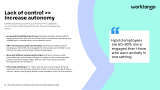
Lack of control >> Increase autonomy
Feel like everything is spinning out of control? Your people do, too. Fix this by creating elements of work-life your employees can control.
• Increase the flexibility of work hours. Flexible schedules allow people to integrate their work into the rest of their lives, and have been proven to be a valuable perk, a morale boost, and a retention-saver.
Hybrid employees are 60-80% more engaged than those who work entirely in one setting.
• Offer remote opportunities permanently. According to Gallup, hybrid employees are 60-80% more engaged than those who work entirely in one setting. They also register higher levels of well-being.
• Work with different communication styles. Roll out a company-wide personality test, such as Myers-Briggs or Insights, to learn about people’s preferred communication styles. (Bonus: Learn more about using the Enneagram test for managers.)
• Extend new challenges. In 1:1 Sync-Ups, be sure to ask forward-thinking questions that communicate a desire to invest in the team member’s future, such as, “Which new projects would you be excited to reach for this quarter?”
Page 5
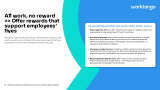
All work, no reward >> Offer rewards that support employees’ lives
Try subsidizing activities that boost mental health, such as:
• Encourage time off. Consider switching sick days to “wellness days” and urge people to take advantage of them to recharge.
• Incentivize exercise. One recent study examined the effects of regular exercise on individuals suffering from burnout. Incentivize physical wellness by offering access to a local gym, virtual group classes, or a company-wide fitness challenge.
Workplace rewards like gift cards and certificates are nice, but they won’t prevent burnout. Instead, offer meaningful rewards that help people put more non-work time back into their busy lives.
• Find ways to help at home. Caring for children while trying to work from home is a fast track to burnout. Try offering a meal prep subscription, an errand service like TaskRabbit, or gift cards for take-out delivery.
• Reward with therapeutic care. Offer rewards that include services like chiropractic care, acupuncture, or massage, which can be a gamechanger for people’s mental health.
Page 6
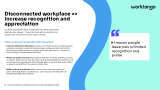
Disconnected workplace >> Increase recognition and appreciation
Too little appreciation leads to thoughts like, “What’s the point? Nobody cares anyway.” Prevent burnout with recognition and rewards that combat burnout and boost morale.
Foster a sense of recognition with these tips: #1 reason people leave jobs is limited recognition and praise
• Practice milestone celebrations. One burnout-fighting tool is simply making sure team members know that someone sees and appreciates their efforts. Don’t let accomplishments, no matter how small, pass you by - notice and cheer loudly in a social recognition feed.
• Make sure praise is heard. Meaningful recognition is timely, specific, and tied to impact. Check out our tips for how to give great employee recognition, and encourage team members to offer focused, peer-to-peer praise by providing an easy to use platform for kudos and high-fives.
• Build a culture of gratitude. Make it part of your everyday rhythm for peers and leadership to say thank you. Learn how we can help with our Recognition & Rewards solution.
Page 7
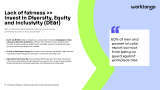
Lack of fairness >> Invest in Diversity, Equity and Inclusivity (DE&I)
With or without a global pandemic, being a minority at work contributes to burnout. How can we help?
60% of men and women of color report burnout from being on guard against workplace bias
• Don’t ask BIPOC (black, indigenous, and people of color) employees to help solve your diversity problems. Instead, look outside of your organization for help. Create company-wide forums and Q&A sessions to educate large groups, and bring in experts if needed.
• Create a diversity strategy. Becoming a more diverse, equitable, and inclusive organization wonít happen overnight; commit for the long haul.
• Give women job security. According to McKinsey, women’s jobs have been 1.8X more vulnerable to the pandemic than men’s jobs. Invest in pay equality, female leadership, childcare subsidies, and flexible work schedules.
Page 8
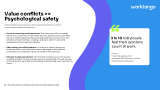
Value conflicts >> Psychological safety
Politics might be polarizing, but the workplace shouldn’t be. Foster psychological safety with these tips.
• Create increased personal connection. The more personally connected we are to our coworkers, the less likely we are to experience burnout. Make the most of these opportunities by using Brené Brown’s tips to honor the emotions of team members, creating a culture in which it’s normal for employees to voice how they’re feeling.
3 in 10 individuals feel their opinions count at work.
• Offer training on healthy feedback. In order for a team to perform at its highest levels, every individual must be equipped to have difficult conversations, to help others grow, and to learn from mistakes.
Source: https://www.gallup.com/ workplace/236198/create-Culturepsychological-safety.aspx
• Embrace change management. The first step in guiding your team towards a healthy change is to communicate early and consistently. This will not only minimize the fear we all feel around change; it will also align your team for the future.
Page 9
At WorkTango, we’re revolutionizing how the world’s most forward-thinking companies engage and inspire their people. We offer the only Employee Experience Platform that enables meaningful recognition and rewards, supports alignment through goal setting and feedback, and offers actionable insights through employee surveys.
WorkTango is built for the workplace we all want to be a part of – where priorities become clear, achievements are celebrated, and employees have a voice. So if you’re ready to make work lives better, check out this short WorkTango overview video, or schedule a demo today.